
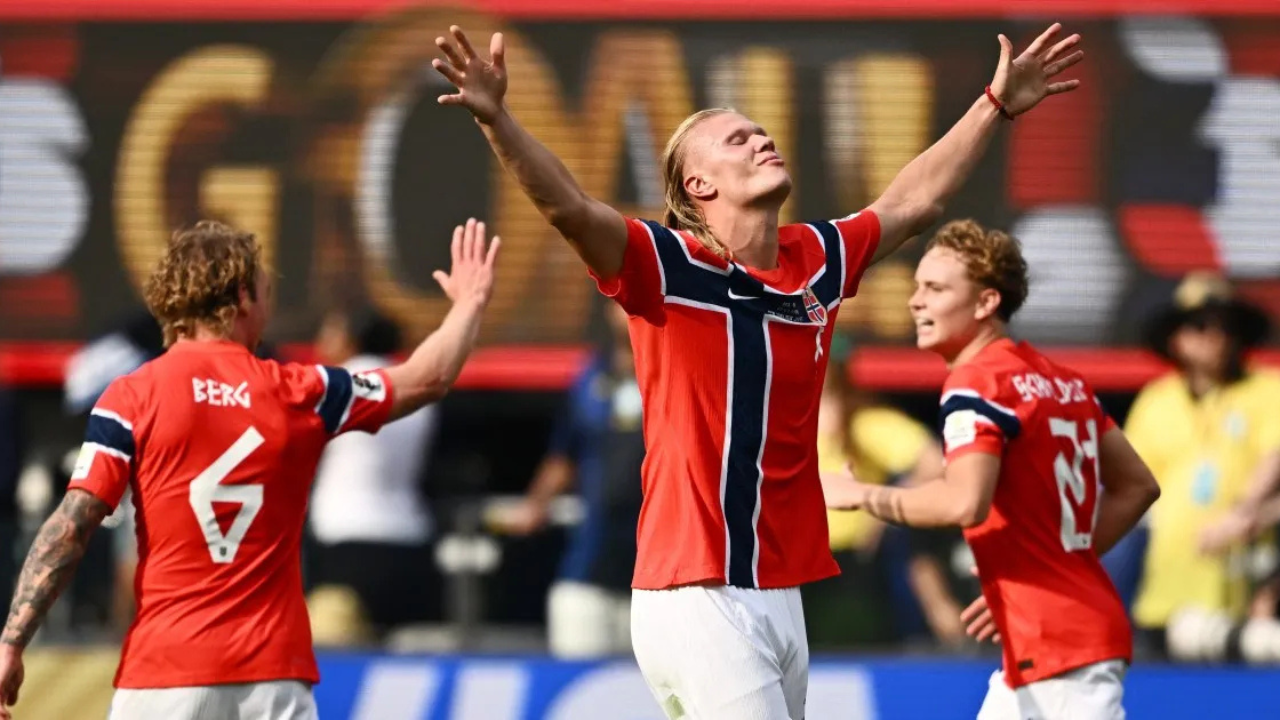
Erling Braut Haaland was already one of the world’s most feared strikers before the 2026 FIFA World Cup. But it was in North America, wearing the red jersey of Norway, that the 6’4″ goal machine truly transcended club stardom and became a household name across the globe — a modern Viking who etched his name into World Cup folklore.
Born in Leeds, England, to Norwegian parents (his father Alf-Inge Haaland was a professional footballer), young Erling showed prodigious talent early. He honed his craft at Molde, Red Bull Salzburg, and Borussia Dortmund before exploding at Manchester City, where his goal-scoring records in the Premier League became legendary. Yet international football had been quieter — until 2026.
Norway’s return to the World Cup after a 28-year absence was already historic. Haaland made it unforgettable. In Group I, he announced himself with a brace in a 4-1 demolition of Iraq on his World Cup debut. He added more against Senegal in a thrilling 3-2 win. Even in a loss to France, his threat was constant. Norway topped the group on goal difference and marched into the knockout stages.
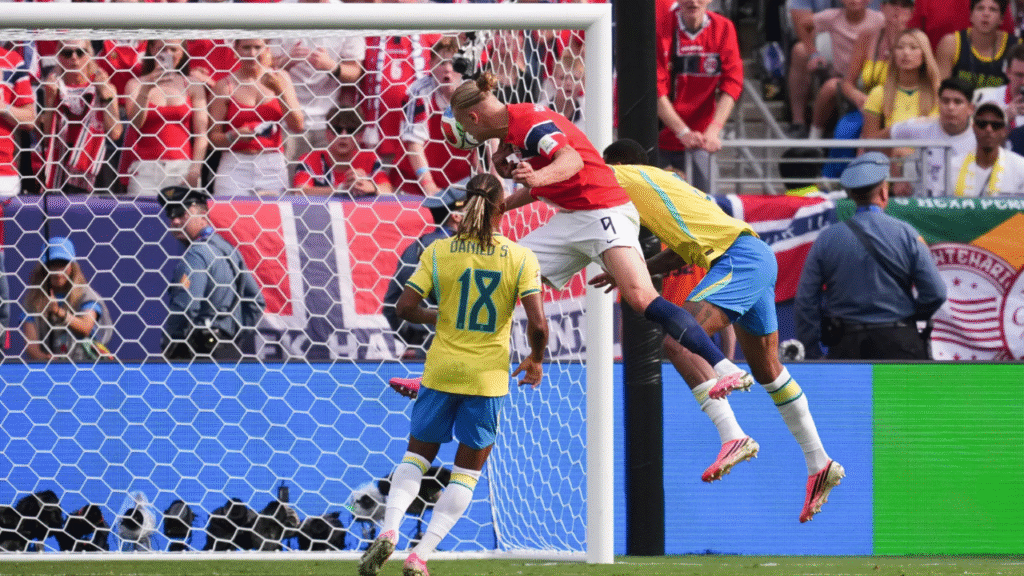
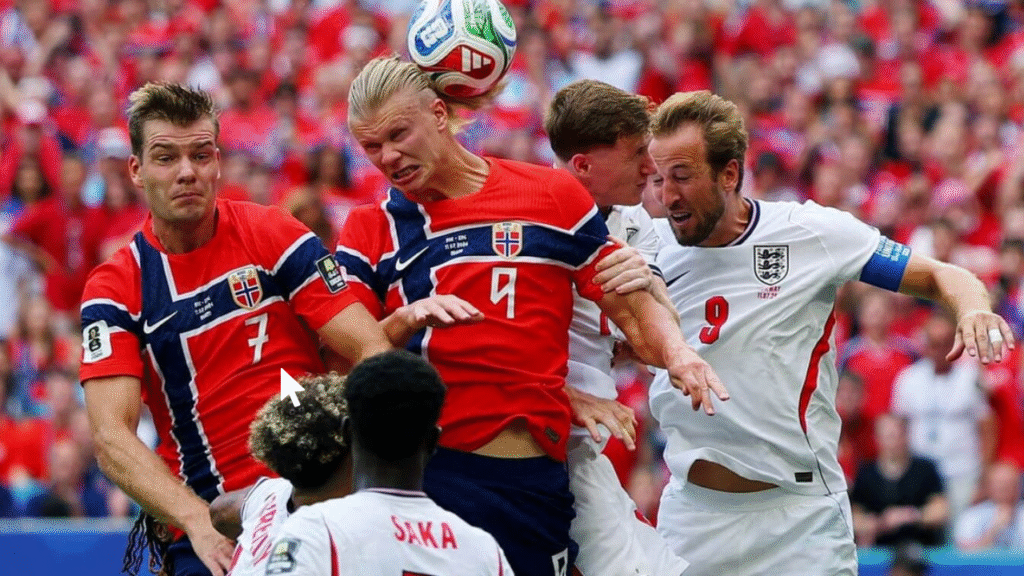
The magic peaked in the Round of 16. Facing five-time champions Brazil, Haaland delivered a masterclass. He headed the opener late and smashed a stunning second from distance to seal a 2-1 upset — Norway’s first-ever World Cup knockout win and their first quarter-final appearance. His seven goals at that stage put him level with Messi and Mbappé in the Golden Boot race. Norway’s fairy-tale run ended in the quarter-finals with a 1-2 defeat to England after extra time. But Haaland’s individual brilliance shone brighter than the result
(Norway Fans Celebrate with Viking Row Despite Defeat to England)
Norway created a global “Viking Row Trend” that took the tournament by storm. The “Viking Row” (or Viking Rowing) celebration became the viral phenomenon of the 2026 World Cup. Fans sit shoulder-to-shoulder in longship formation, rowing imaginary oars in perfect sync to an accelerating drumbeat while chanting “Ro” (Norwegian for “row”), building to a massive triumphant roar. It was created by superfan Ole Frøystad, inspired by ancient Viking maritime history — crews rowing together as one before battle — and a Rosenborg BK chant. It spread everywhere: stadiums across the US, New York’s Times Square, streets in Oslo and Bergen (where the noise even registered as a minor “earthquake” on seismographs), and even Norway’s parliament. Players joined the fans on the pitch after key wins (like the Senegal victory that secured knockout qualification and the Ivory Coast win). Haaland and captain Martin Ødegaard participated enthusiastically — Haaland even discussed it beforehand and later posted that it was “bigger than football.” The gesture symbolized unity and national pride, turning Norway’s campaign into a cultural movement that united fans worldwide and boosted the team’s energy.
(Norway’s Viking Row Celebration After Eliminating Brazil From the World Cup!)
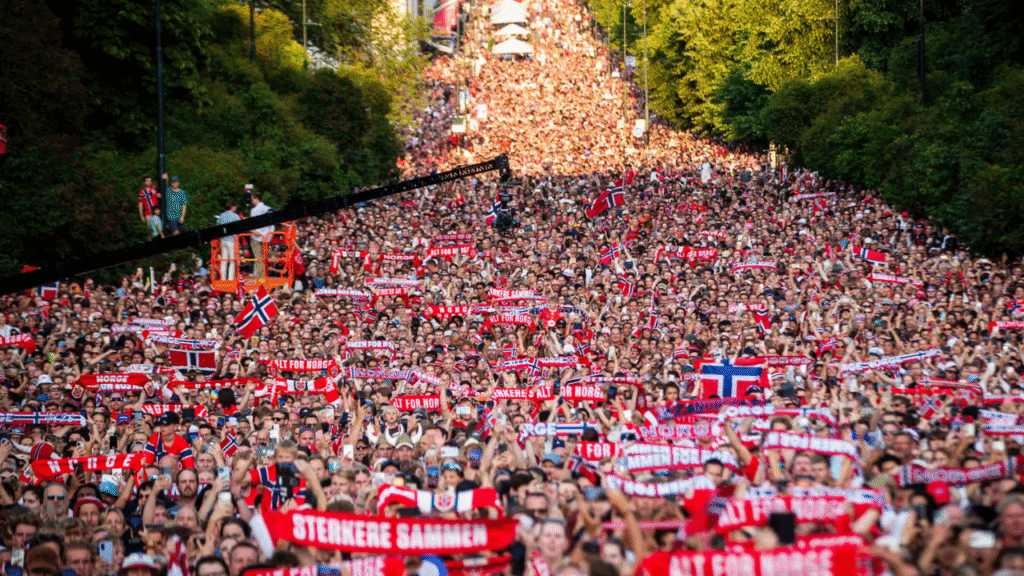
Norway welcomed their heroes home like true legends after their historic quarter-final run. On July 13, 2026, the team returned to Oslo to a massive hero’s welcome. Fighter jets escorted their plane. Over 100,000 fans (estimates ranged 90,000–120,000) packed the streets, Royal Palace square, and Karl Johan thoroughfare. They received a royal reception from King Harald V, Crown Prince Haakon, Princess Ingrid Alexandra, and Prince Sverre Magnus. Crown Prince Haakon personally invited the squad and led a giant Viking Row on the palace steps with the roaring crowd chanting “Alt for Norge” (Everything for Norway). An open-top bus parade followed, with emotional tributes and deafening cheers. The entire nation celebrated the best World Cup performance in decades — a boost to national pride and even social integration. Haaland joined the royal part but had to leave early for travel commitments.
(Crown Prince Haakon leads Norway’s National Football Team at the Palace)
What made Haaland’s 2026 rise so special was the contrast: a towering, physical striker in a team that punched above its weight through organization and belief. His goals against powerhouses like Brazil proved he could dominate on the biggest stage. Post-tournament, his fame skyrocketed — endorsements, global recognition, and conversations about him as the future face of elite striking. Even in defeat to England, the world saw a predator who refuses to be contained, backed by a nation that rowed together as one.
Erling Haaland’s story is one of raw power meeting relentless ambition. From promising youth to Premier League destroyer to World Cup phenomenon and cultural icon, the 2026 tournament was his coronation. Norway may have fallen short of the ultimate prize, but Haaland — and the Viking spirit he helped unleash — emerged as true legends whose impact will echo for years.
More links:
+ Shackled for the first time at this FIFA World Cup, Erling Haaland reflects on a breakthrough tournament for a Norway side that depart after quarter-final defeat against England: https://www.fifa.com/en/tournaments/mens/worldcup/canadamexicousa2026/articles/erling-haaland-norway-england-reaction
+ Erling Haaland Goal 90′ | Brazil v Norway | FIFA World Cup 2026: https://www.fifa.com/en/watch/5D8tGQuly6Opqj5cat12l0
+ How I became Erling Haaland | Documentary: https://youtu.be/YY8bKoospnc?si=xmLtRzQY5G2wkNzZ